
13th to 15th September 2024
We all have bucket list trips. Those football adventures to places often far, sometimes near, which we long to go to. For me, a trip to the Faroe Islands has been number one on my list for well over a decade.
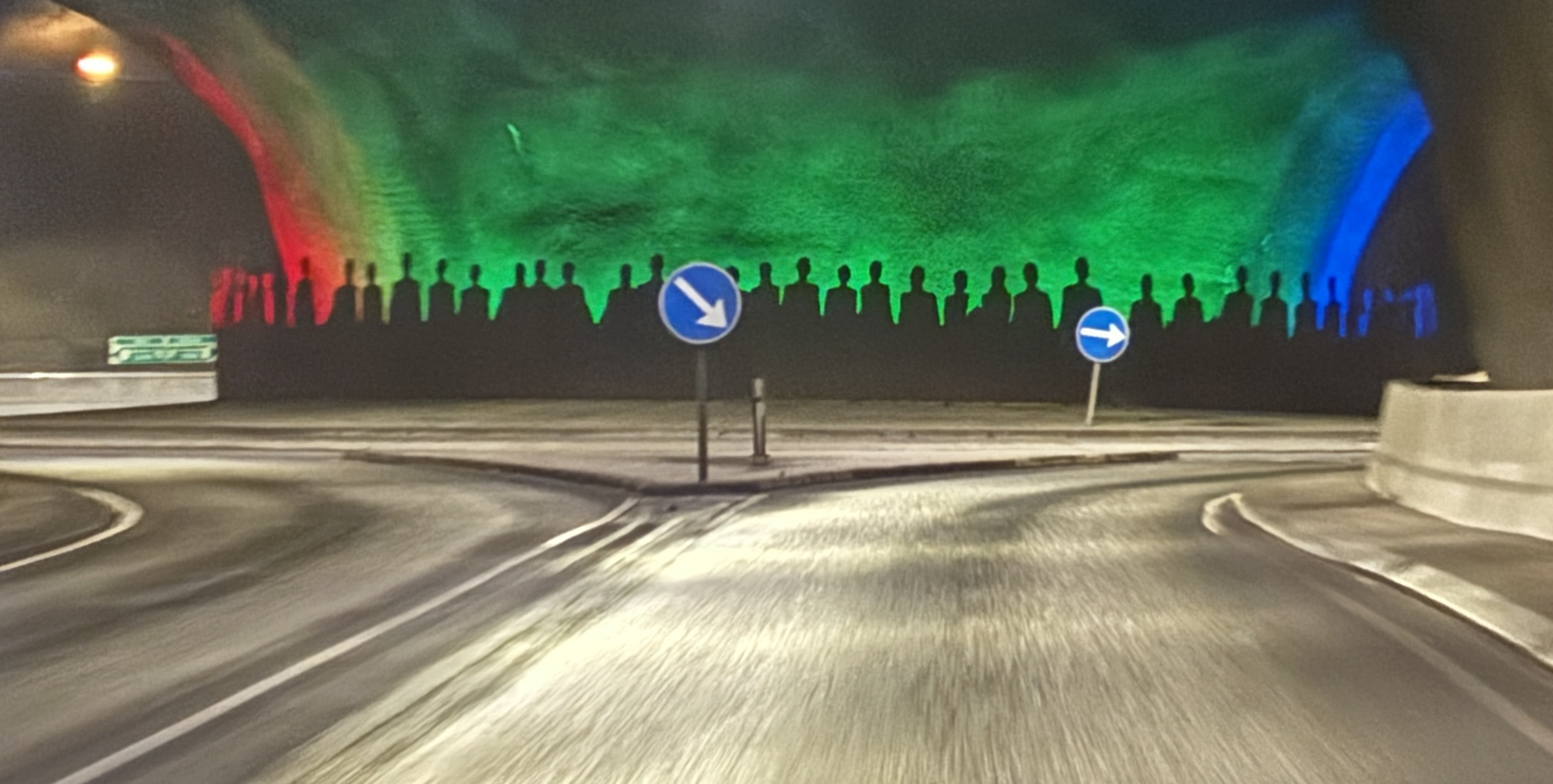
The most common question I had to answer before the trip, and since I returned when asked, was “where exactly are the Faroes?”. A fair question as the country really doesn’t hit the headlines often. And why would it? It’s a country of 53,000 people, with 70,000 sheep. It is the only country in the world with no McDonalds (it does have a Burger King though). There are a total of five traffic lights across the whole country, whilst the population is so well behaved there is no prison. You are never further than 3 miles from the North Sea and the famous toll tunnels, linking the main islands charge over £30 each way – sounds expensive? But the alternative is often detours that can take up to an hour longer.
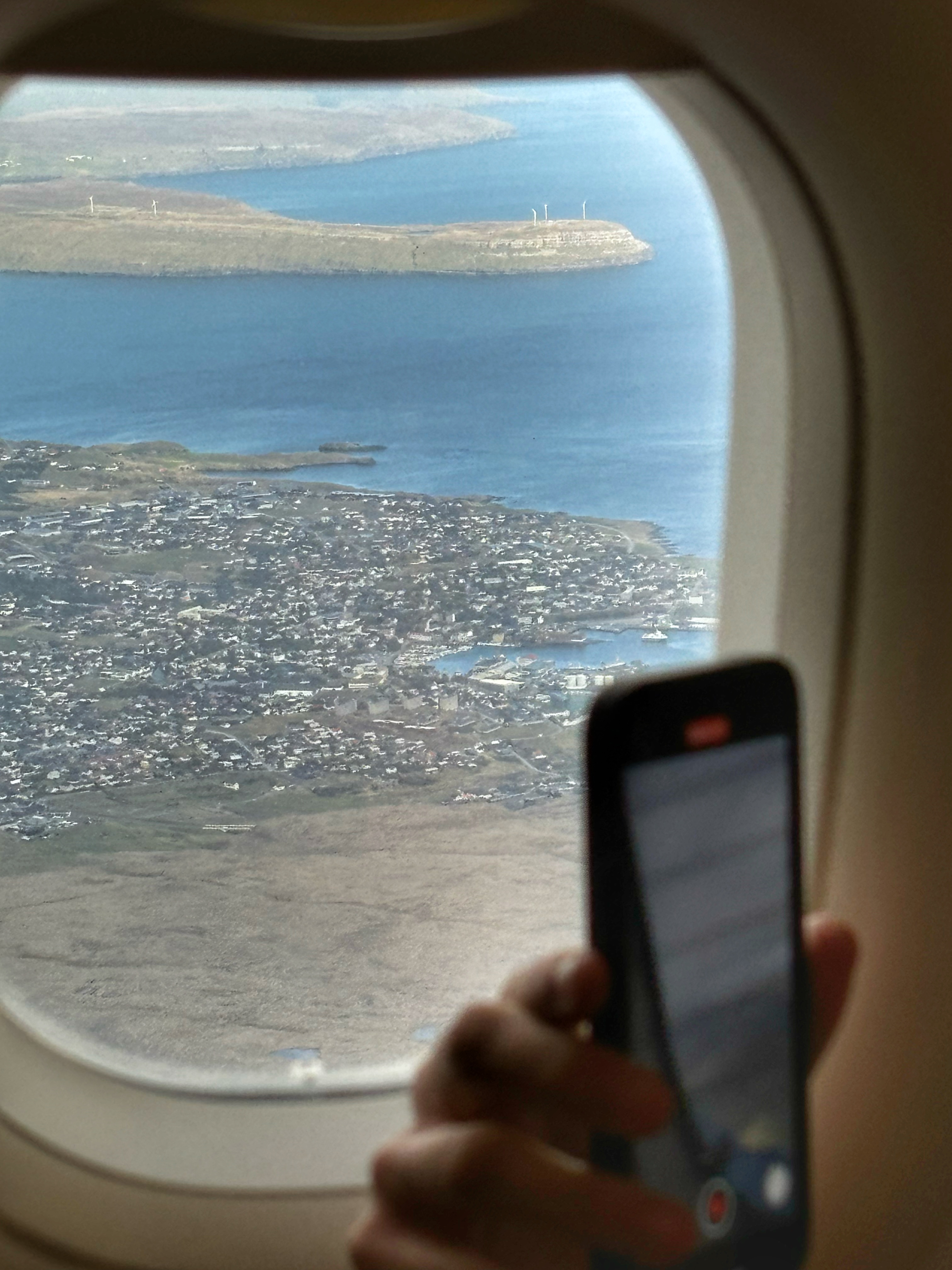
We arrived via Copenhagen on Friday afternoon, with the approach to the airport giving us our first look at the stunning scenery. You can only do the island justice with a car. There are buses but outside of the capital they are infrequent.
After a beautiful late summer’s evening on Friday, Saturday dawned with heavy rain. The national stadium across the road from the hotel was shrouded in low cloud. It didn’t look good for a day of touring the island and watching football. But the one thing we would learn in our time on the islands is that the weather changed quickly and as you travelled through the tunnels between the islands.
Game 1 – EB/Streymur II 4 FC Suðuroy 1 – Holmanum A Eiði – Eiði


This wasn’t on the agenda. The original plan was to head to the village of Eiði, one of the furthest points on the island Eysturoy to take in some stunning views of the headland and the old church, but as we descended the hill, there in front of us was a ground, with players warming up. It was 12pm and it seemed there was a game about to start. The rain was hammering down, with a small group of fans taking shelter around the side of the single stand.
You didn’t have to leave the car to watch the game, either from along the side of the pitch, behind one of the goals or taking the road up the hillside to get a perfect bird’s eye view. We had no idea who was playing, with the usually reliable Futbology App telling us the nearest game kicked off at 1pm some 15 kilometres away in Streymnes.
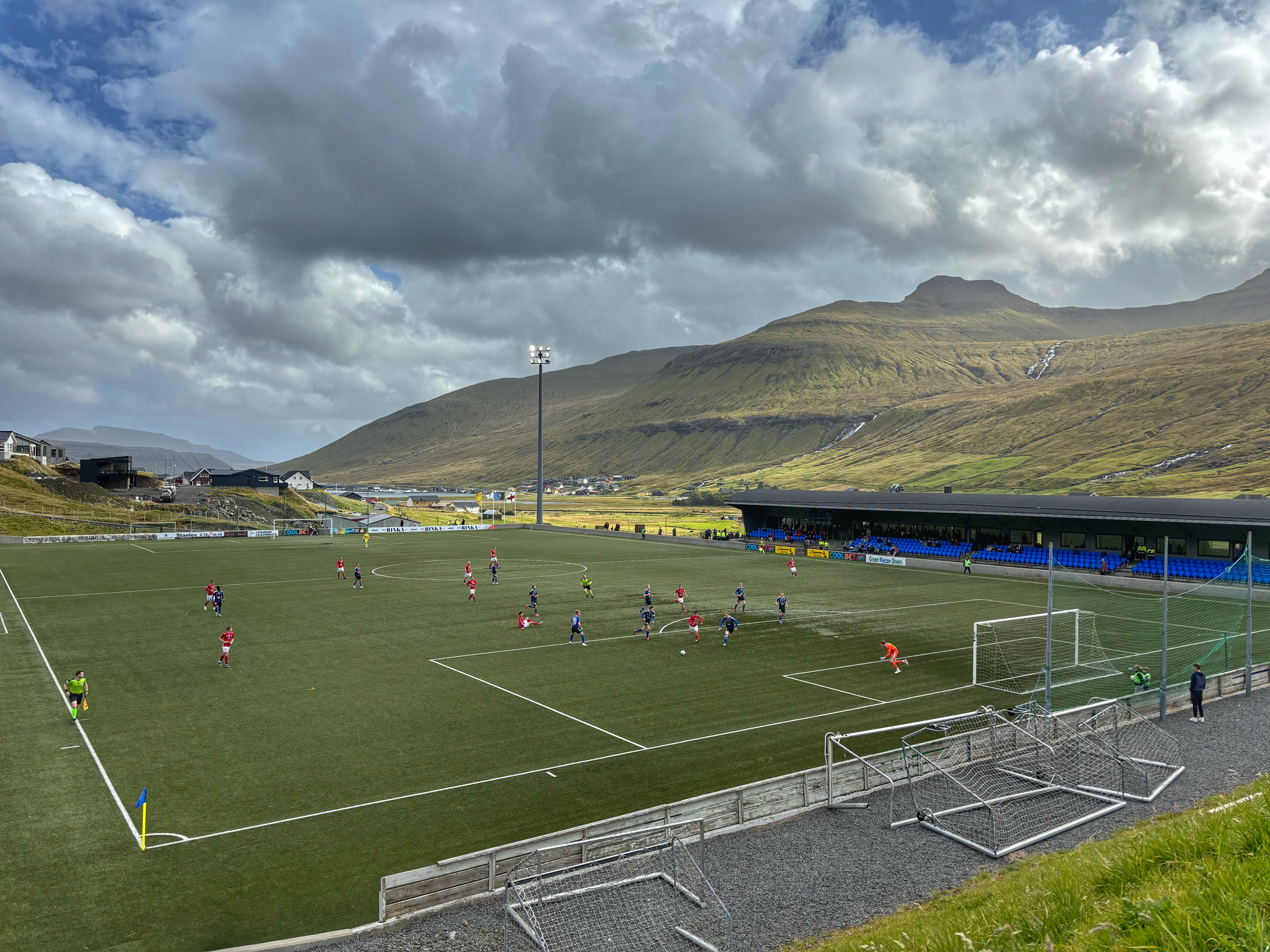
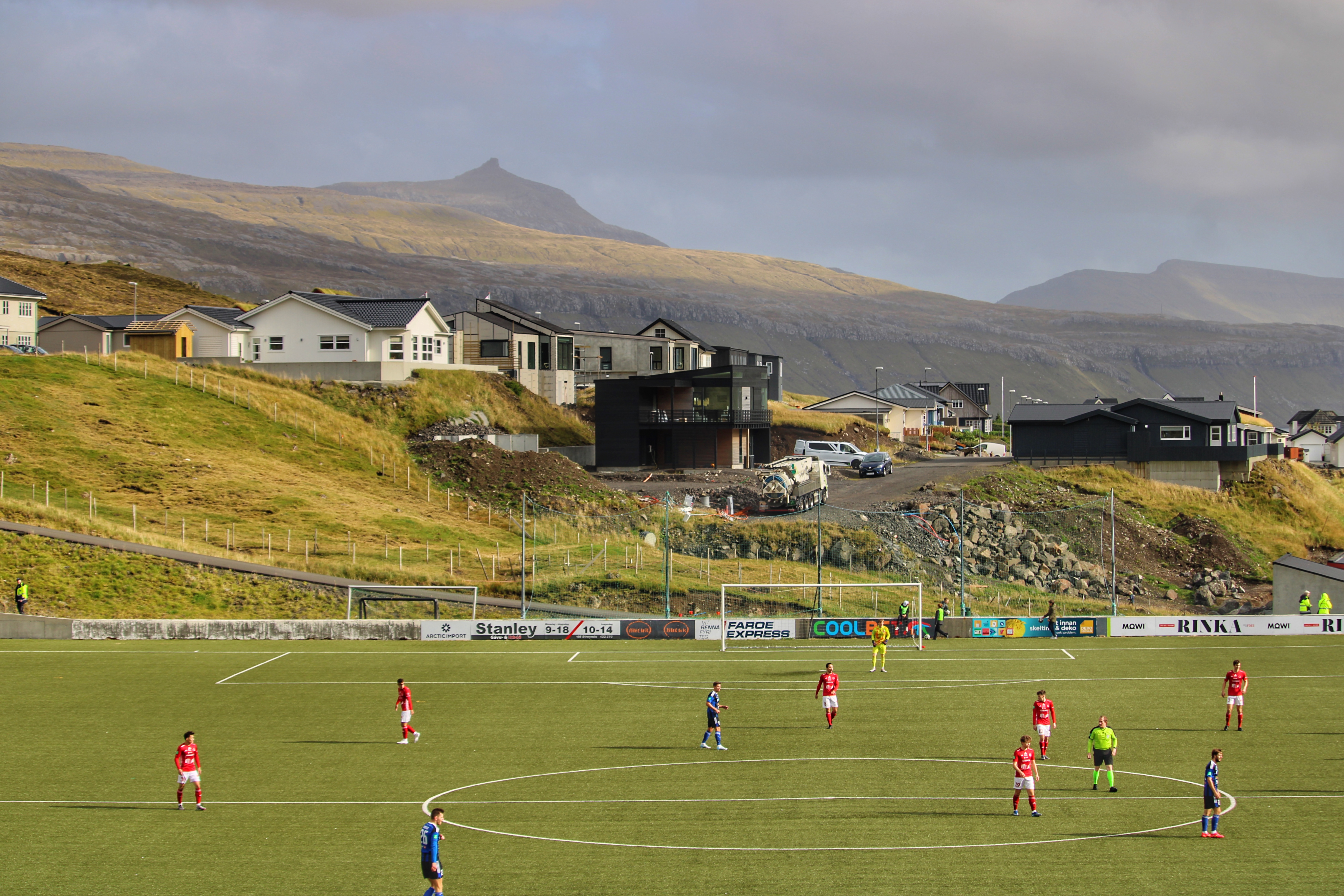
Towards the end of the second half we headed off, arriving shortly after at the deserted Við Margair stadium in the hamlet of Streymnes where we were going to watch what we thought was EB/Streymur II. Located at the start of a magnificent valley, with water cascading down the sides of the mountains, the ground was deserted, the rain pouring down. Surely the game couldn’t have been postponed due to the weather? Perhaps the away side, coming from the island of Sandoy couldn’t get here? Neither of these. The reserve team didn’t play here – they played up the road in Eiði, and had been the game we had been watching.
Game 2 – KÍ Klaksvík II 2 FC Hoyvík 1 – Við Djúpumýrar, Klaksvík
Our second (third?) destination was the second biggest town on the Faroe Islands, Klaksvík, located on the island of Borðoy, a 30 minute drive away and our first opportunity at experiencing one of the legendary sea tunnels, this one “only” costing £14 one-way. Having headed out early, our plan was to head to the best fish and chips on the Faroe Islands, according to Frank from Glasgow on TripAdvisor, which was located in a car park on the quayside in the town centre.
We waited for our fayre then headed to the Við Djúpumýrar, finding a parking space behind the goal and watched the game whilst the rain hacked it down. At half-time I ventured out and sat for 10 minutes in the main stand on my own. There were more people watching from their cars than in the ground, the low cloud obscuring the view of the mountains behind the goal.
Heðin Olsen gave the away side a surprise lead, looking for just their fifth win of the season but Klaksvík, themselves just one place above them, hit back with two goals in as many first half minutes thanks to Dávid Biskopstø Andreasen then Dan Soylu.


Game 3 – Víkingur Gøta II 1 B71 Sandoy 1 – Sarpugerði, Nordragota
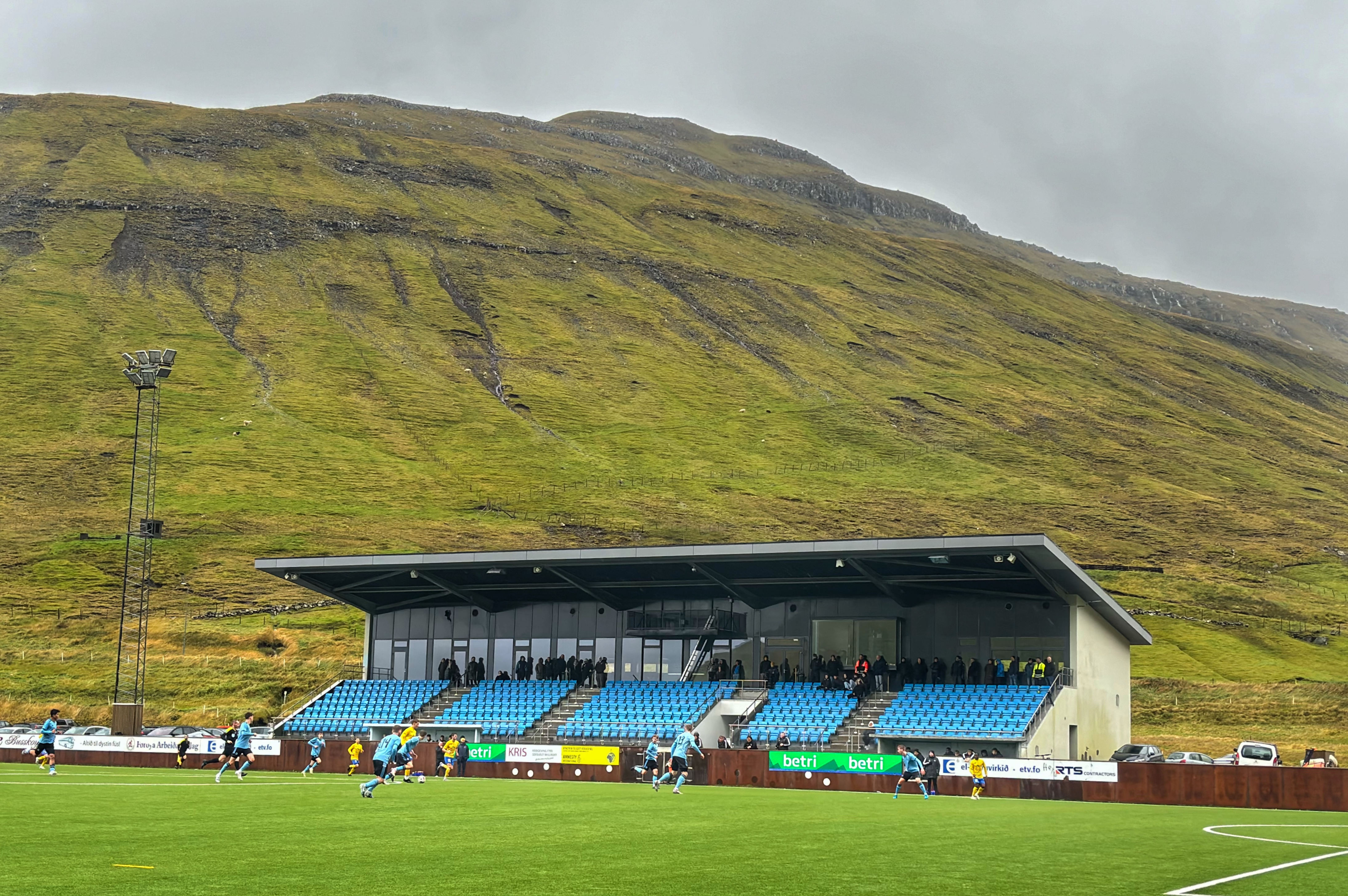
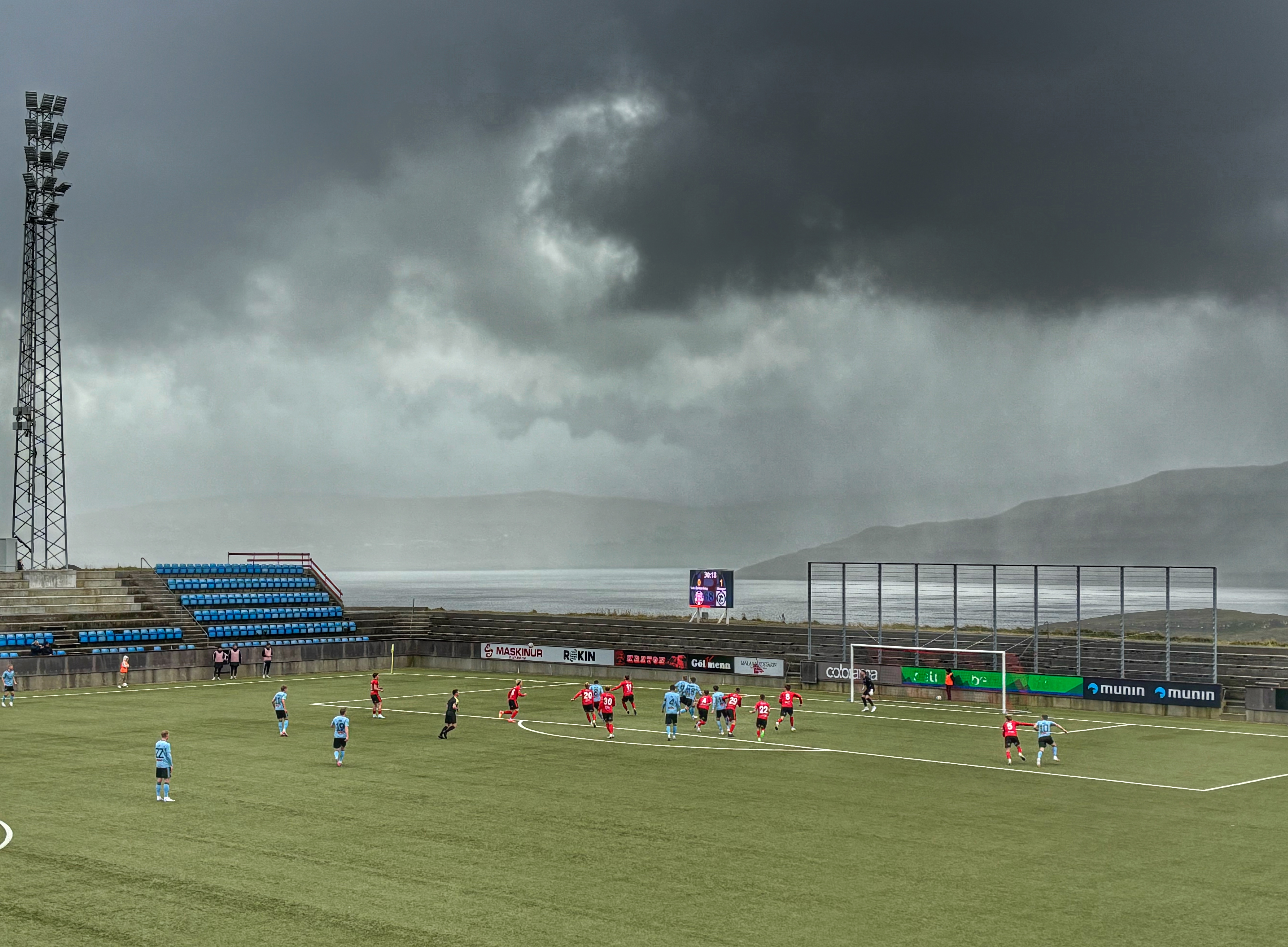
The weather was foul in Klaksvík and with fifteen minutes left of the game we headed off, back through the tunnel and onto Eysturoy, reaching the hamlet of Nordragota in less than 15 minutes and just as the match between Víkingur Gøta II and B71 Sandoy kicked off in completely different conditions to those the other side of the water. The rain had stopped, the cloud was much higher and the steep hills framed the small cluster of houses on the water’s edge and the smart little ground, home to Vikingur, the current Premier League leaders and their reserve side, who topped the second tier.
The thin crowd huddled at the back of the stand to avoid the cold wind that whipped up from the sea, with some fans not emerging from their cars parked around the side of the pitch. The home side took the lead in the 32nd minute, Bjørn Bakk Bjarkhamar finishing off a smart move which had the Sandoy manager, in perfect English, refer to his centre-backs as a “pair of unfit ponies”. An unusual phrase for a local, delivered in a scouse accent. Research (Wikipedia) showed that he was in fact Richard Goffe, former Woking Under18s manager, who had been managing B71 since 2020.
His side had their deserved equaliser in the 88th minute thanks to the Brazilian striker Romulo Cicolin Bosqueiro who swept home from close range.


Game 4 – NSÍ Runavík 3 Havnar Bóltfelag II 0 – Við Løkin, Runavík
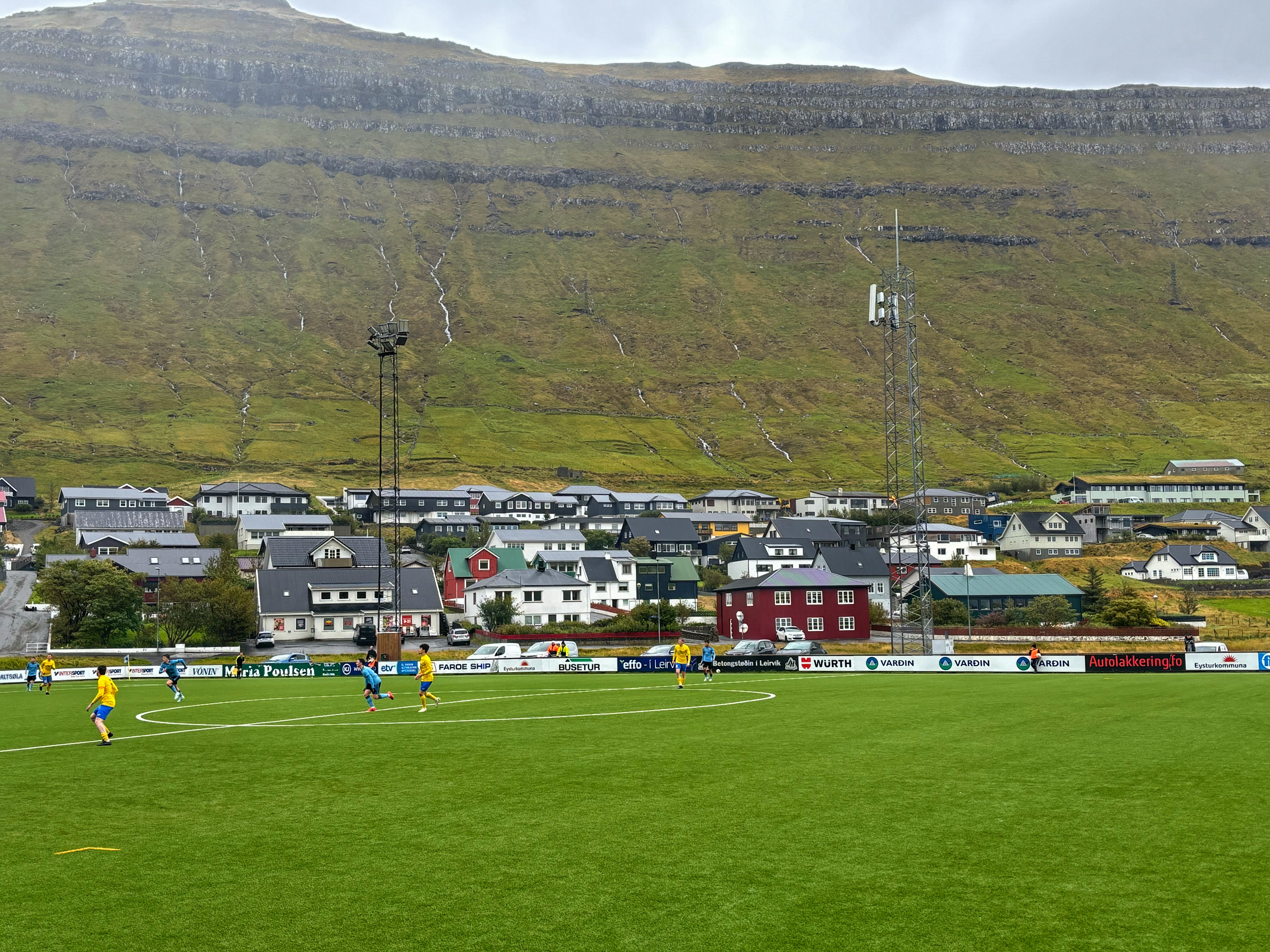
Less than 15 minutes after we left Nordragota we arrived as the teams in Runavík emerged for the second half, with the game scoreless. The town, one of the major ports on the islands, sits on the opposite side of the water to the capital Tórshavn. The stadium is undergoing some redevelopment work, the club planning to ensure their ground is up to scratch for European fixtures. There’s one main stand, a wooden affair with five rows of seats and hard standing around the rest of the ground.
We’d just taken wandered behind the goal when Súni Hansen smashed home from 30 yards, with the ball going through the HB keeper’s hands. The 53 other fans went wild, or at least broke into a polite round of applause. Jógvan Højgaard added a second with ten minutes to go, and after we left on the 90th minute Mórits Heini Mortensen added a third in injury time.


Game 5 – Argja Bóltfelag 1 Tvøroyar Bóltefag 2 – Skansi Arena, Argir
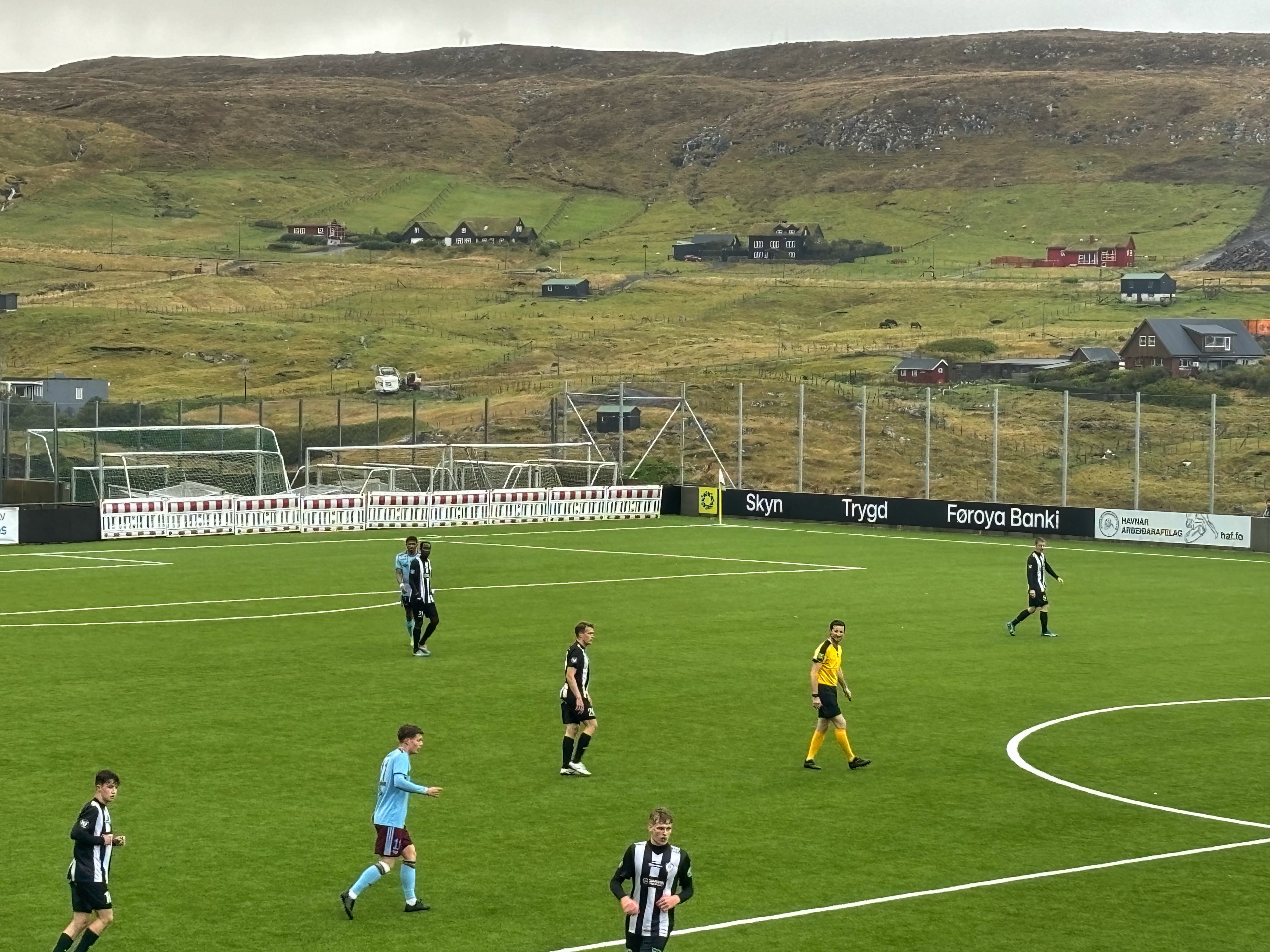
Located high above the centre of Tórshavn is the small “suburb” of Argir, which offers some impressive views of the capital and the North Sea beyond, especially from the back row of the main (only) stand in the Skansi Arena. A small group of young AB fans, armed with drums, were keeping up the neighbours as both sides swapped attacks. This was the first game we had been to in the day where there’d been any food or drink for sale – limited to beer or coffee, crisps or sausages.
In January, the club announced they had become a feeder club of FC Copenhagen, hoping that a bilateral relationship would propel them upwards into the top division. The home side included former Liverpool youth player Marley Blair in their starting XI, whilst TB 1892, the oldest club in the Faroe Islands had Helen Nkwocha in the dug out who in August 2021, became the first woman to manage a top-flight European men’s football team.
Rógvi Skála opened the scoring for the home side and they dominated play, but simply couldn’t add to their score and it was no surprise when Ndende Adama Guéye equalised in the 64th minute. Against the run of play as the clock ran down the Norwegain Markus Thorberg won it at the death for TB.


Game 6 – IF Skála 4 07 Velur 1 – Undir Mýruhjalla, Skála
After a full-on day, we headed across town from Argir to our hotel in time for “Wine Hour”. With alcohol being restricted and expensive, unsurprisingly every resident in the hotel headed to the bar to claim their free glass of wine. I’m pretty sure it wasn’t local wine – I know that climate change is impacting farming but with volcanic soil and an average summer temperature just making it into double figures, I think growing grapes may be a bit of a challenge.
Refreshed, it was time to head back to Eysturoy, through the magic (and eye-watering £33 each way) tunnel to the tiny village of Skali, home of the biggest shipbuilding yard in the country, and a population of 775 (newborn baby having arrived earlier in the week according to the local newspaper) for our first taste of Premier League Faroe Islands football.
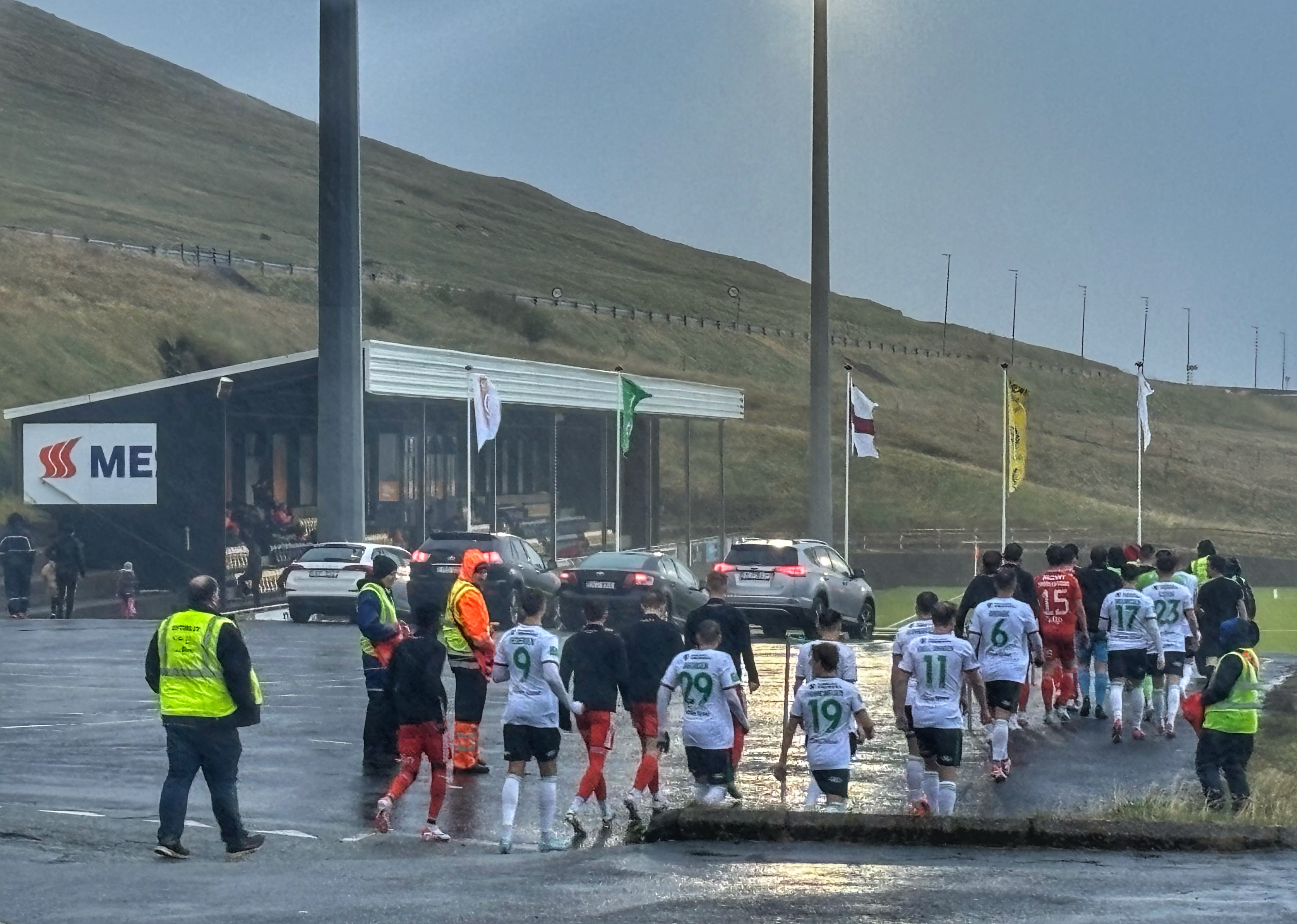
The weather had got worse and the rain was torrential as we arrived at the ground, having to avoid the players who were returning to the dressing rooms, across the car park, after their warm up. This was the first game we had to pay to get into – as we would find out every game in the league charged 100DKR (£11) per adult. We tucked ourselves away in the back row of the main stand, with a view of the fjord and mountain beyond, shrouded at times by the cloud rolling down to the water.
The home side seemed more comfortable with the conditions, which whilst the game was being played on a 3G, had to be in doubt as puddles sat on the playing surface. However, they took the lead in the 16th minute when the Nigerian Maxwell Michael Effiom scored from close range. One became two five minutes later when Karl Martin Johansen scored from the spot. Wanting to get the shot I’d planned, I quickly drove up to the main road at HT, whilst there was still some natural day light before returning, once again avoiding the players wandering across the car park.
The local lad and aptly named Ragnar Skála scored the third just after the break and whilst Filip Brattbakk reduced the areas from a highly-debated penalty, Effiom grabbed his second, and the home side’s fourth as the game entered the 90th minute. Not a bad first full day…finger’s crossed day two would bring better weather.


Game 7 – EB Streymur 2 Ítróttarfelag Fuglafjarðar 1 – Við Margáir, Streymnes
Sunday morning brought us perfect weather for football and photos. Dry, bright, with some stunning cloud formations. Game one was the lunchtime kick-off, back in Streymnes, a twenty minute drive from the capital, allowing us time to get in a bit of culture at the National Museum and Art Gallery.
The best place to watch the game from the car it seemed and we bagged a spot almost on the half-way line. A shopping trolley arrived with coffee and beer, whilst the fans in the main stand opposite once again sheltered from the wind whipping up the valley. In terms of settings, this was up there with the best. The 250 (convenient number) witnessed a decent game with Senegal’s Boubacar Sidik Dabo opening the scoring for the home side in the 29th minute. Half-time brought a free for all of kids playing on the pitch.
The second half was only moments old when Emil Weihe Joensen doubled the lead, although the away side bit back almost immediately through Ruben Møller Nielsen. However, the drama came in the 90th minute when both sides were reduced to 10 men after an incident off the ball.
Time to head to game 2, retracing our steps to within 100 yards of our hotel.


Game 8 – B36 Tórshavn 2 NSÍ Runavík 2 – Gundadular, Tórshavn
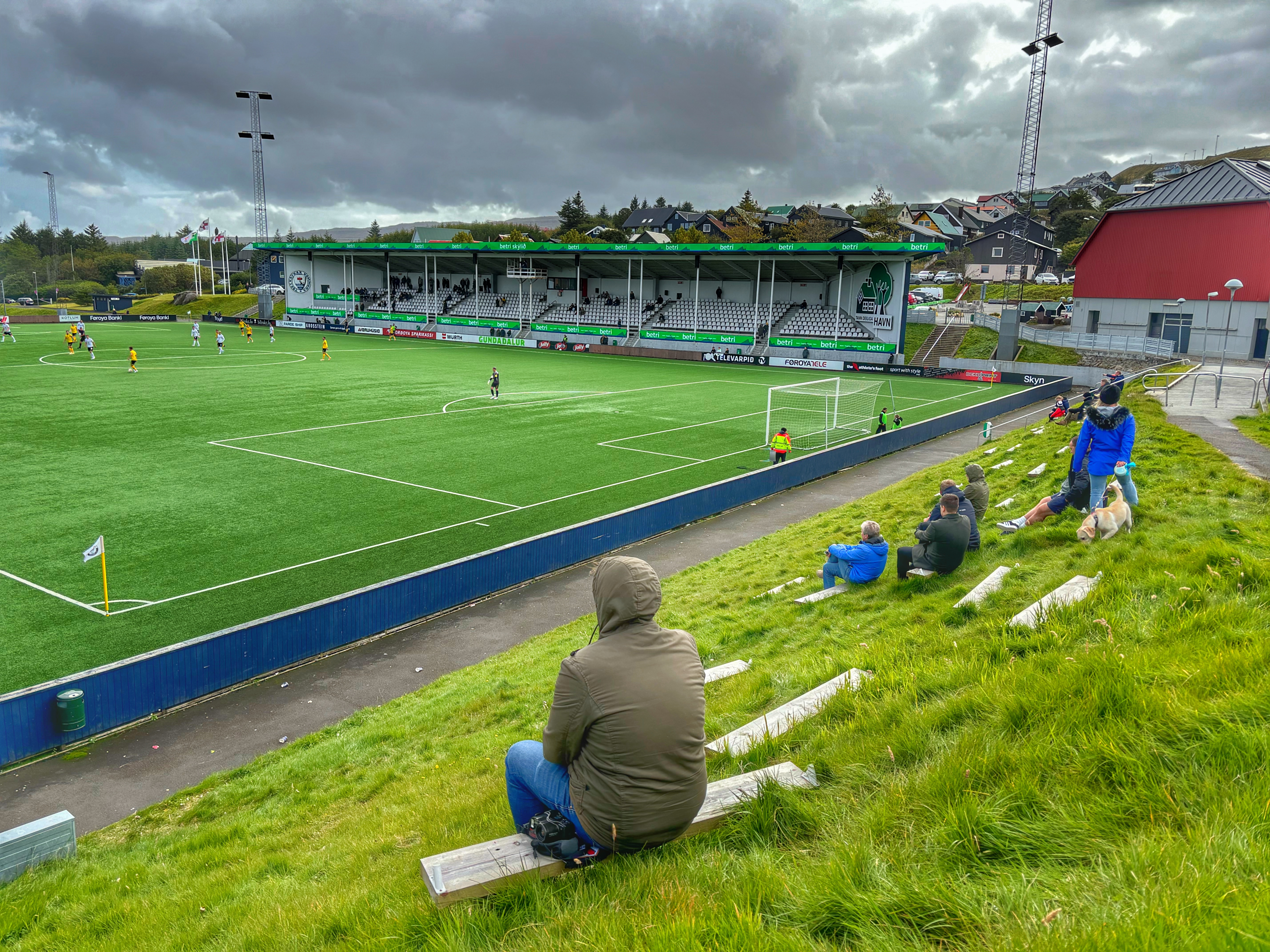
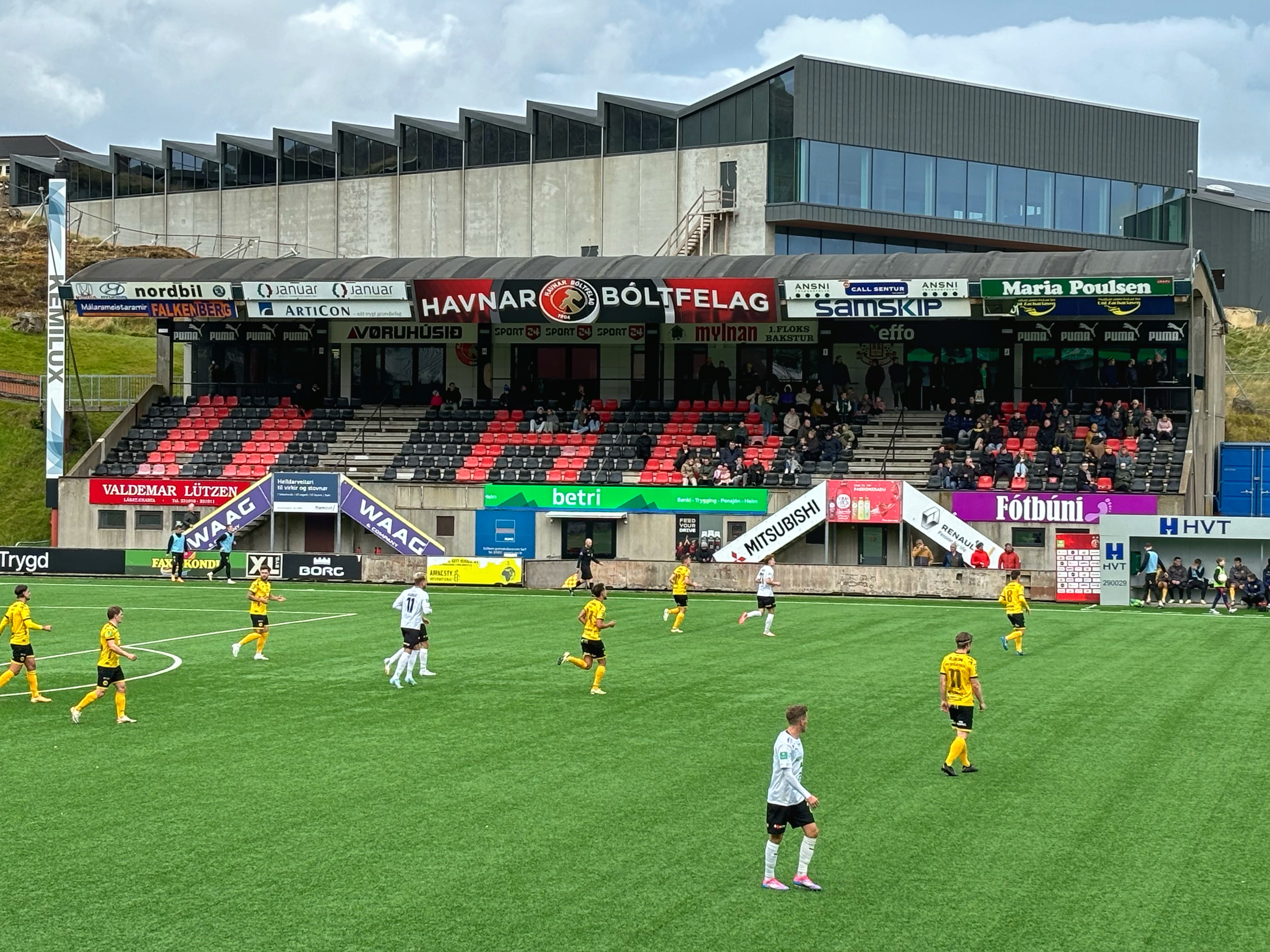
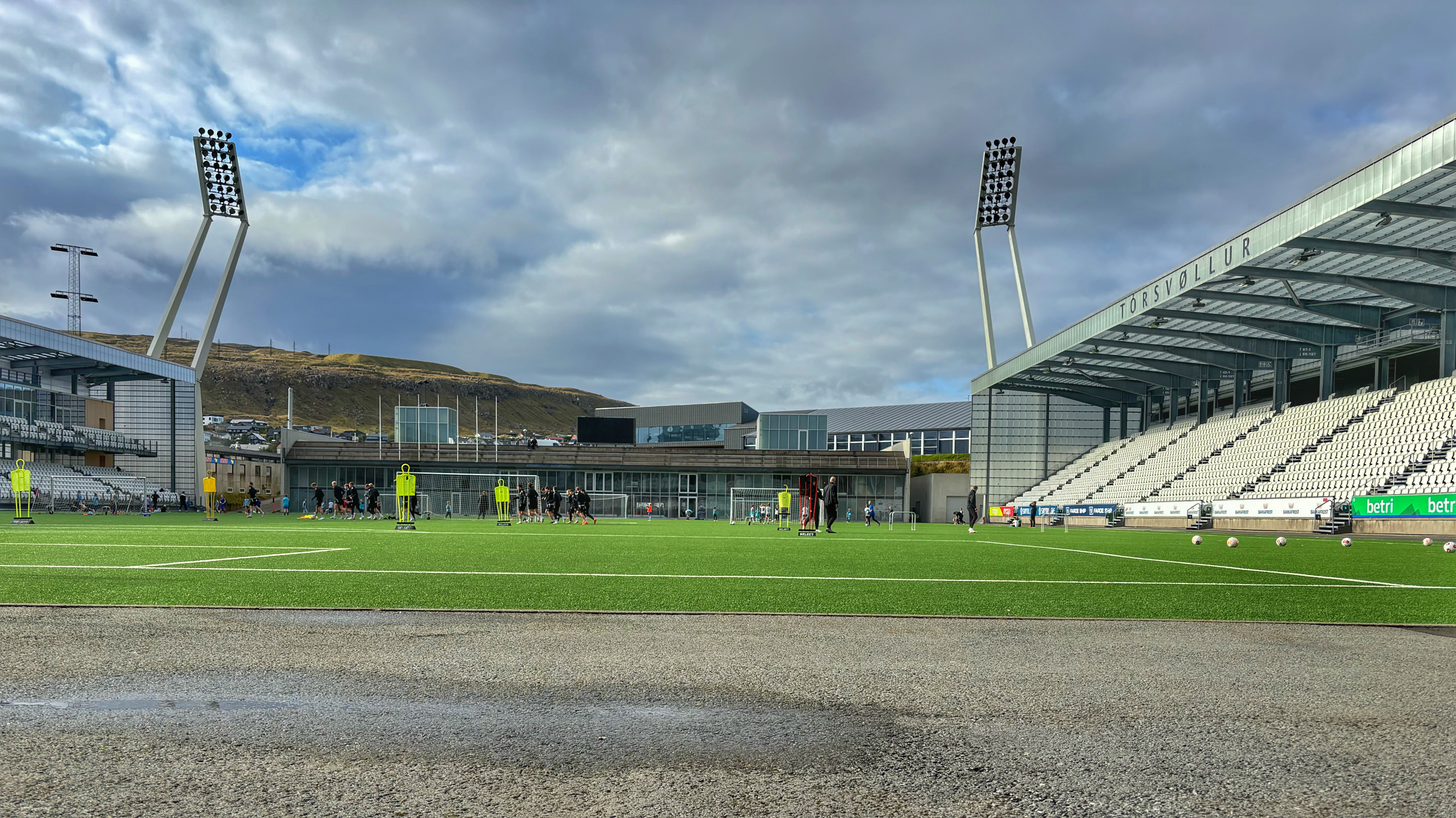
The Gundadular is the collective name for the three grounds located just on the edge of the capital, including the National Stadium (Tórsvøllur), and the Ovari vøllur (The Upper Field) which is home to both B68 and HB, plus their respective reserve sides. On one side of the ground, each club has their own almost identical stands, sitting above pitch level, whilst on the opposite side is the iconic wedge shaped stand. At one end are benches built into the hillside, with a stream running down the hill. Very picturesque.
Last season, B36 were the second best supported team in the league with an average of 579, just above fellow Gundadular residents HB. This season HB’s crowds have surged up to an average of 729, whilst B36’s have fallen by over 40% – without any discernible reason. For this game there was no official attendance announced but there was likely to be less than 400 for what was a relatively local derby.
Danish striker Zean Peetz Dalügge put the home side into the lead in the 30th minute, only for Jasper Van Der Heyden to equalise two minutes later. The Dane put B36 back in front in the 51st minute, breaking the offside trap but a dubious penalty, converted by Petur Knudsen gave the visitors a share of the points, a result that all but ended both sides chances of a European spot via the league table. B36 would have a shot at a European Conference spot when they faced rivals HB in the cup final in early November in the national stadium next door.


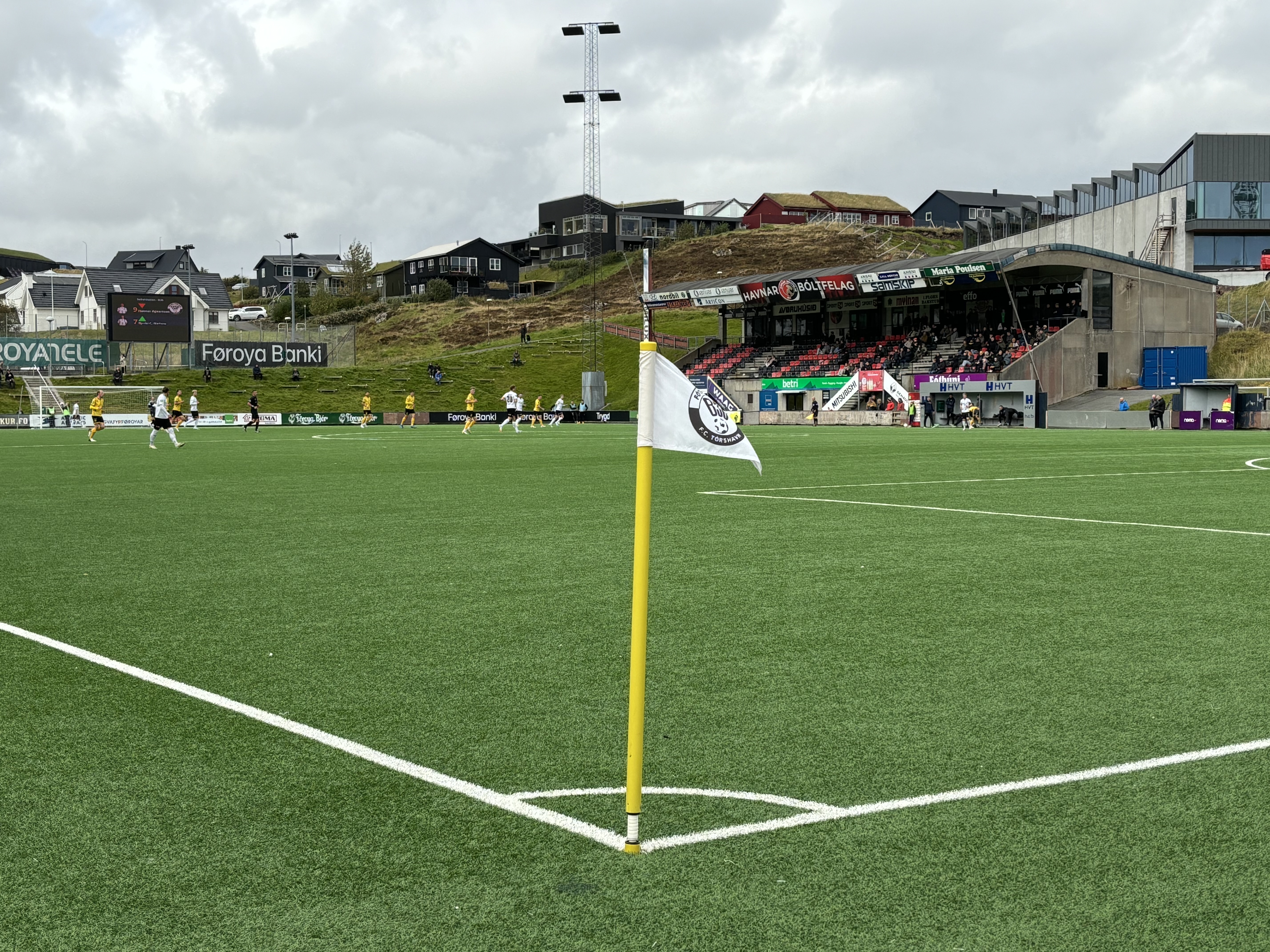

Game 9 – B68 Toftir 1 Víkingur Gøta 2 – Svangaskarð, Toftir
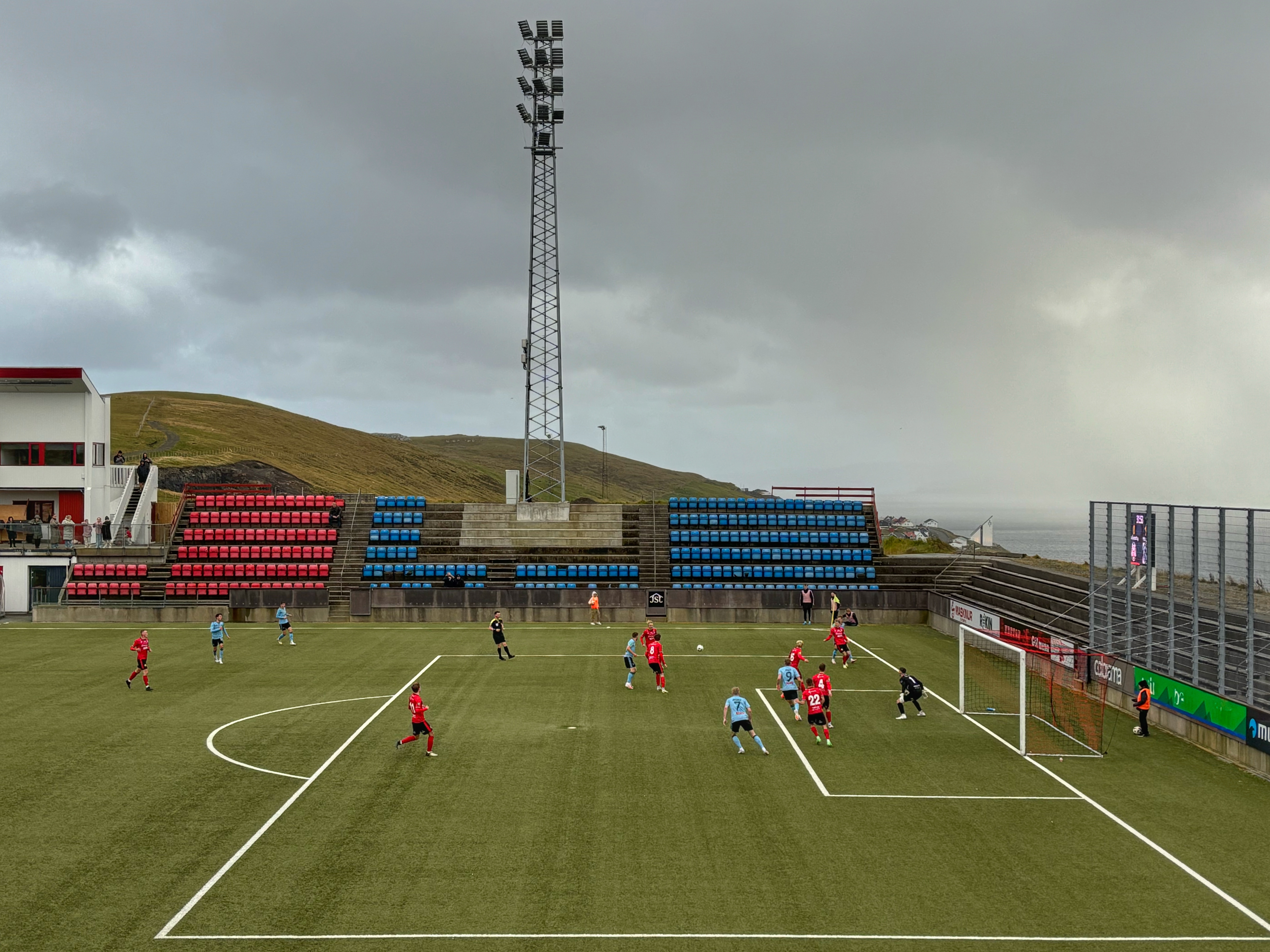
And so it was time for the last game of the weekend, the early evening kick off in Toftir, where the league leaders Vikingur were the visitors. According to Google Maps it was a 15 minute drive from the Gundadular, through the Eysturoyartunnilian at £33 each way. Alas, Google hasn’t figured out about multi-layers, so as we approached the end of the tunnel, it told us to turn right and the ground would be on our left. Except we were still below the water, and a right-hand turn would see us crash into a solid rock face. The ground was indeed there, but 50 metres above us.
We finally pulled into the car park, which was almost full. It was here that the Faroe Islands were first permitted to host international football in 1991, when UEFA allowed competitive games to be played on artificial surfaces – prior to then they had to play home games in Landskrona, Sweden. They continues to host games here until the completion of Tórsvøllur in 1999.
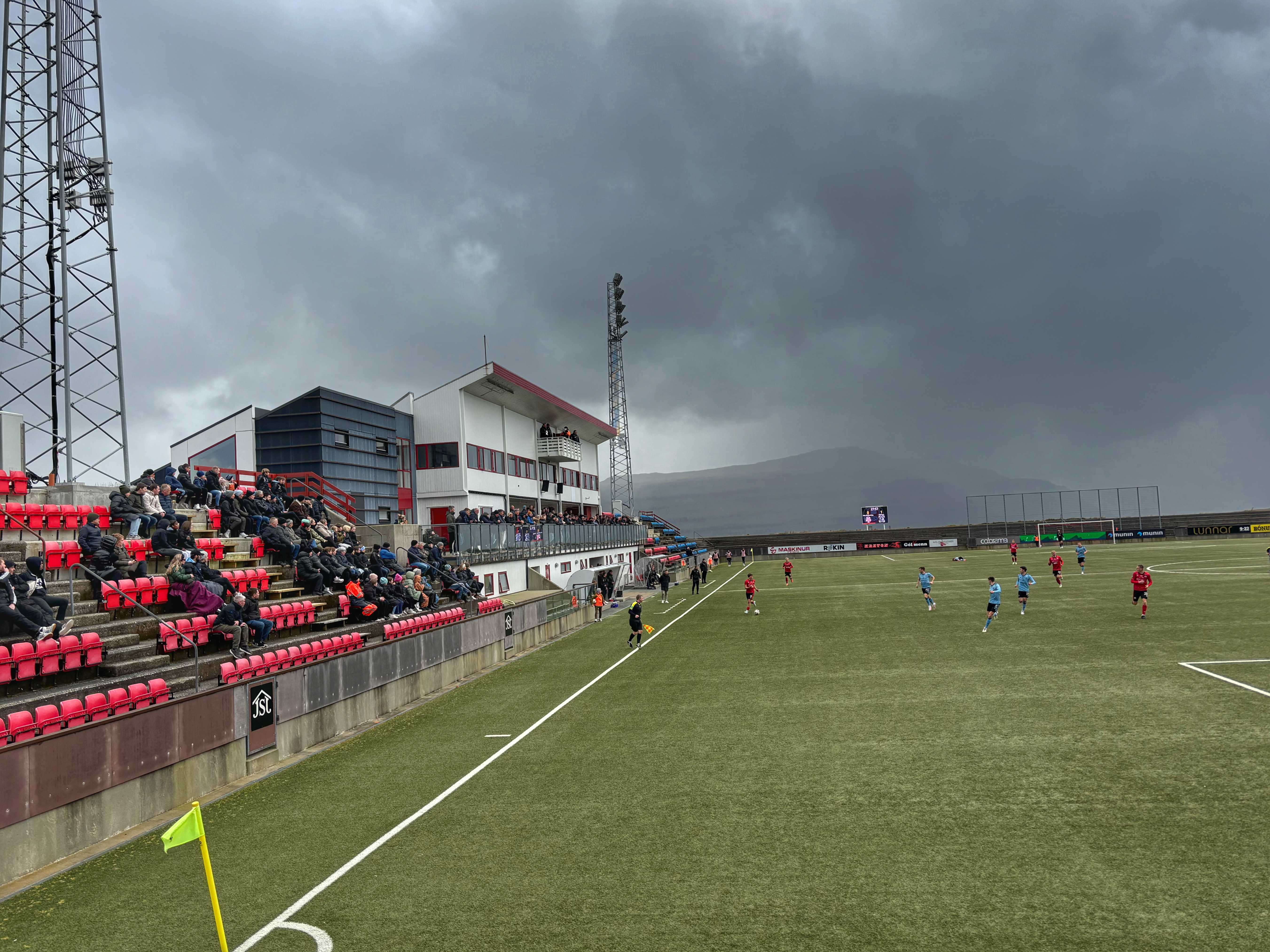
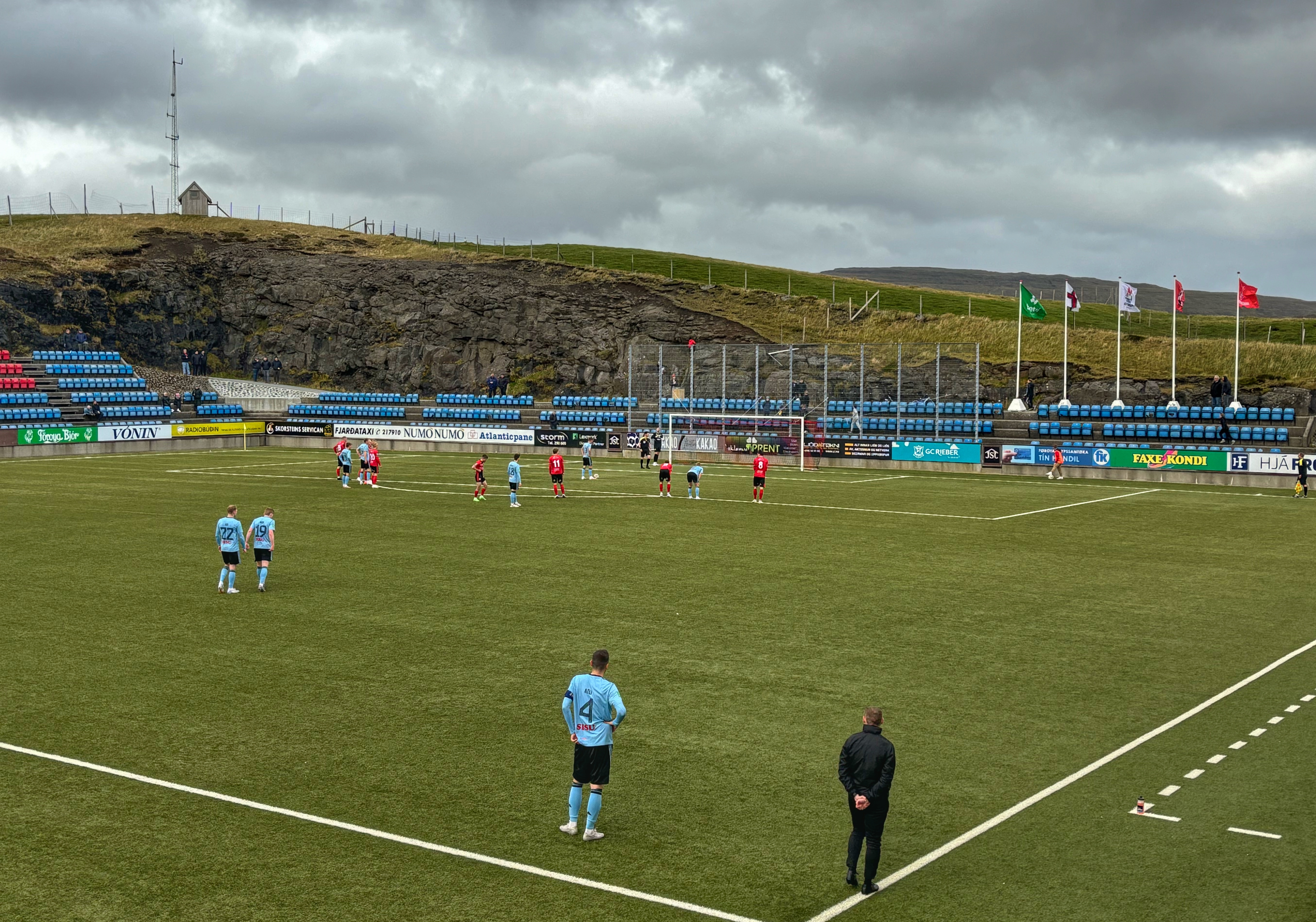
It is a bleak spot in many regards, perched high on the hill above the Skalafjordur. The wind roared and the rain lashed down on the fans who had huddled in the main stands, whilst on the opposite side, where the seats looked like they were carved out of the rocks. Vikingur had brought a few fans who made a decent noise but to be honest I was distracted by the amazing landscape and views at down the side of the hill and across the water.
The visitors took the lead in the 22nd minute when Jørgen Nielsen netted from close range. They were in total control and it was a question of how many in the first period, but somehow it got to half-time just 1-0. They finally doubled their lead just after half-time, Sølvi Vatnhamar netting from the penalty spot. It looked comfortable for Vikingur but a 91st minute goal from B68’s Hjalti Strømsten made the time-added on a little bit more nervous than it needed to be.
The win kept the visitors ahead at the top of the table as they look for their first title since 2017, whilst at the bottom B68 still sat in the relegation places, four points from safety with just five games to go.
And just like that, the weekend of football was done. We returned to our hotel, enjoyed a very hearty dinner and possibly the most expensive bottle of ordinary wine I’ve ever had. What a place, what a weekend.


THE FACTS
Games: The top two divisions are made up of 10 teams each. Whilst games may be initially confirmed a few weeks in advance, they frequently change at short notice (as we saw on Saturday morning). The FSF.FO website has everything you need to know. This URL is updated with any match change details – https://www.fsf.fo/kappingar-og-urslit/menn/betri-deildin-menn/
Admission: Admission is 100 Danish Kroner for all top flight games. You can pay by cash or card when you arrive at the ground. Admission for second and third flight games is free of charge.
Food and Drink: Limited in the grounds. One or two served coffee or beer, and AB sold hot dogs but apart from that there are slim pickings at most grounds.
Programmes: None appeared to be available at the games we attended although I did see someone with one at EB Streymur
Travel to the Faroe Islands: This summer Atlantic Airlines started direct flights a few times a week from Gatwick, which were very popular. These stopped in September, and we traveled via Copenhagen which is easy enough with an hour lay over.
Getting Around: Whilst you can make do without a car, it wouldn’t be easy to get around and maximise your time to watch games. The 300 Bus run regularly from the airport to the centre of Tórshavn and costs 120DKR each way. Whilst car hire isn’t cheap and the tolls can be eye watering, it does allow you to zip around the islands. Out of the 20 teams currently playing in the top two divisions, all bar 2 can be accessed easily by car. TB and FC Suduroy are located on the island of the same name, only accessible by ferry.
Currency: It is card everywhere, cash is definitely not king on the Faroe Islands. They do have their own currency, pegged to the Danish Kroner, which is also accepted everywhere. There’s plenty of ATMs around despite the love of contact less.
Mobile Phone charges: Be warned – most roaming deals that cover Europe do not include the Faroe Islands. If you are hiring a car, you can rent a mobile WiFi unit cheaply.
Internet: It’s everywhere and mostly free!
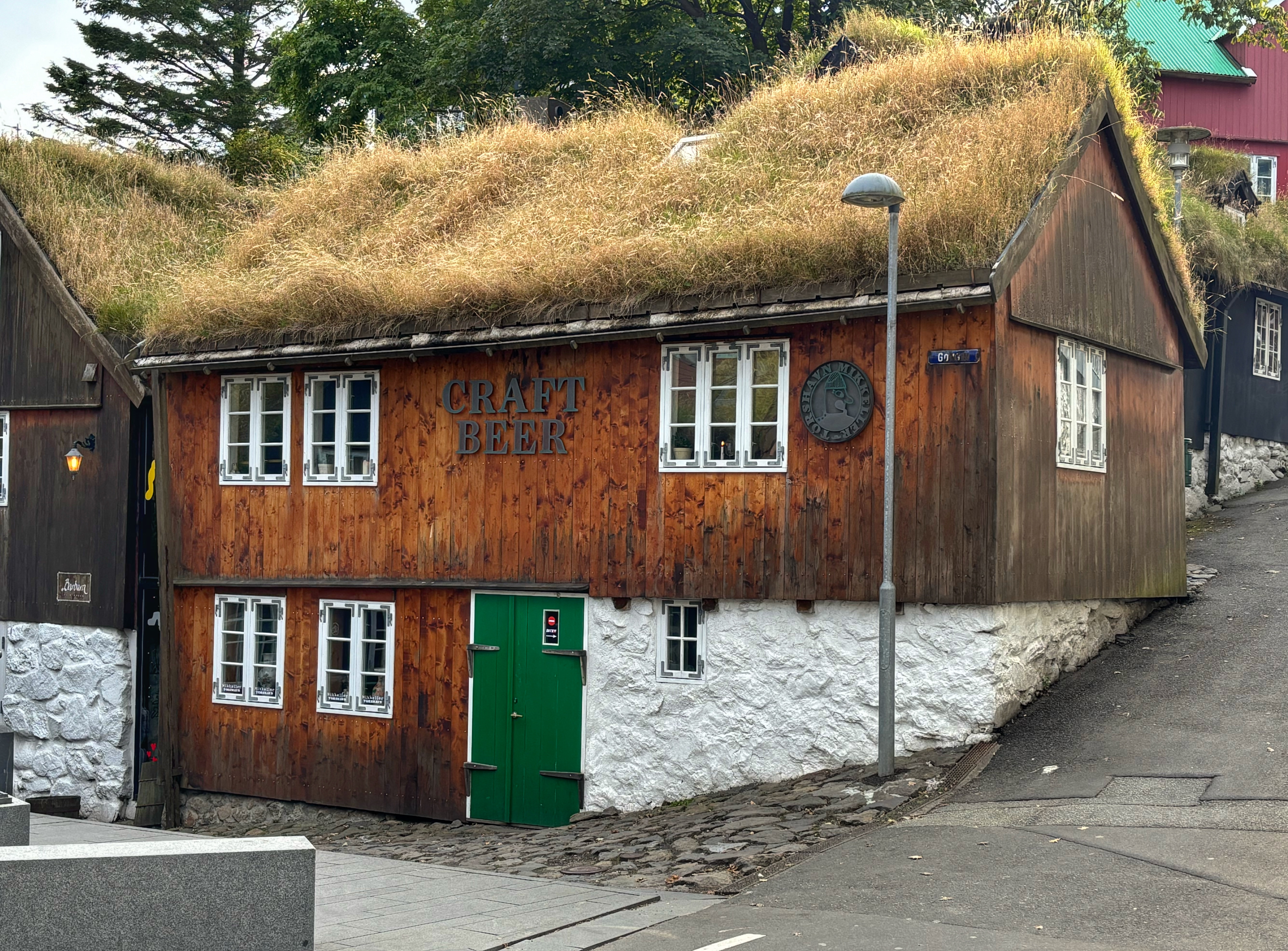
Do try: Local OY beer – you can visit the tap room just five minutes from the National Stadium complex in Falkavegur. Plenty of smoked meats on sale there too.
Don’t try: The local delicacy is air dried fermented lamb which is very much an acquired taste
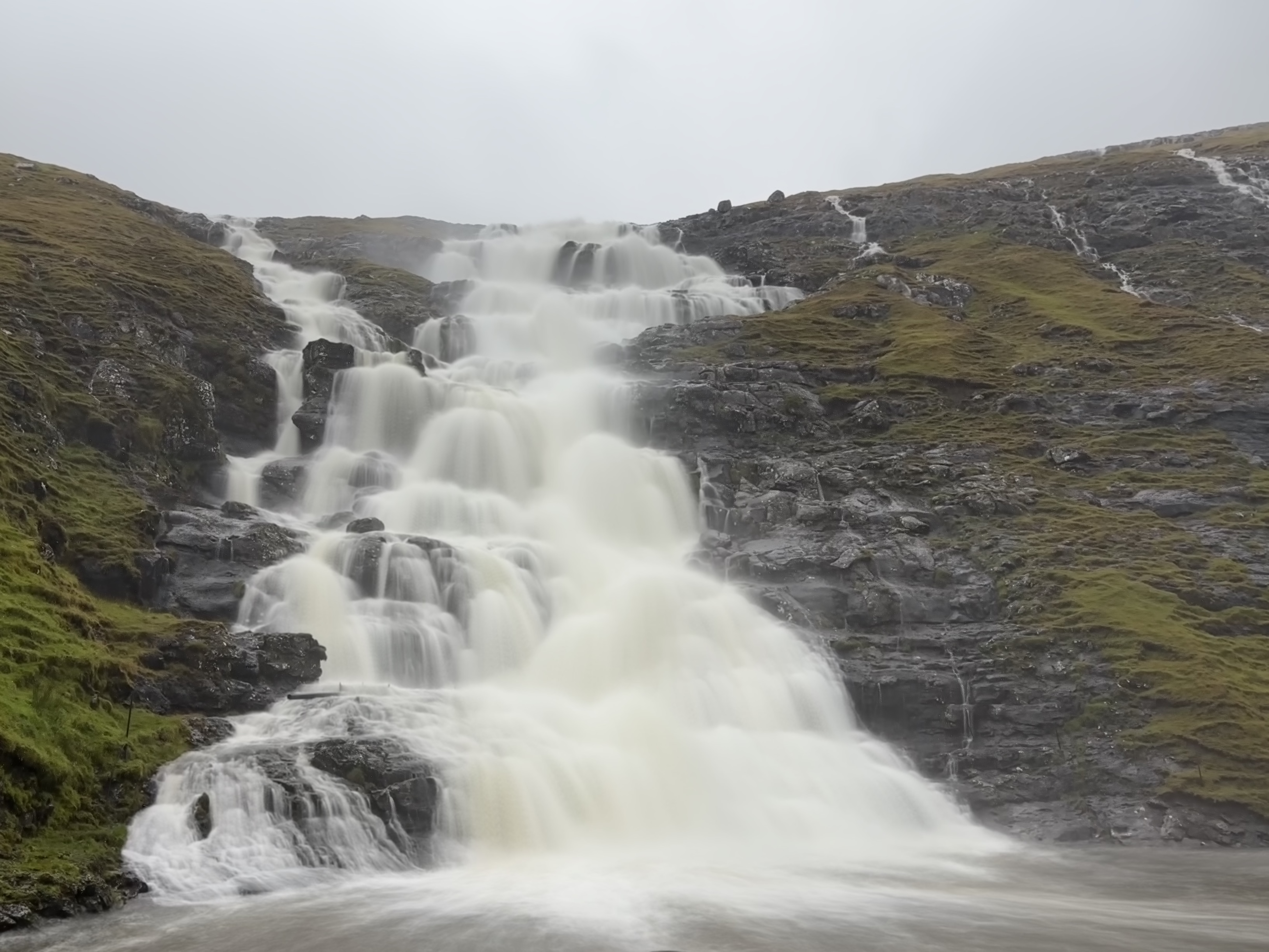
Some pictures that aren’t football related…








 The Ball is Round
Leave a comment