Something rotten in the state of Denmark


Last season the world of European football was mildly surprised to see a new name joining the Champions League jet-set. Many words have already been written, including our own views, on the miraculous rise from regional cup final to the world’s richest club competition of FC Nordsjælland. Whilst the champagne corks were popping in the Farum, the sleepy northern Copenhagen suburb back in May, there was the usual end of season soul-searching on the other side of the Capital of Cool. Brøndby IF, for so long the title also-rans, had experienced a season from hell, finishing just two places and six points above the relegation zone. Fast forward twelve months and the situation is even more dire.

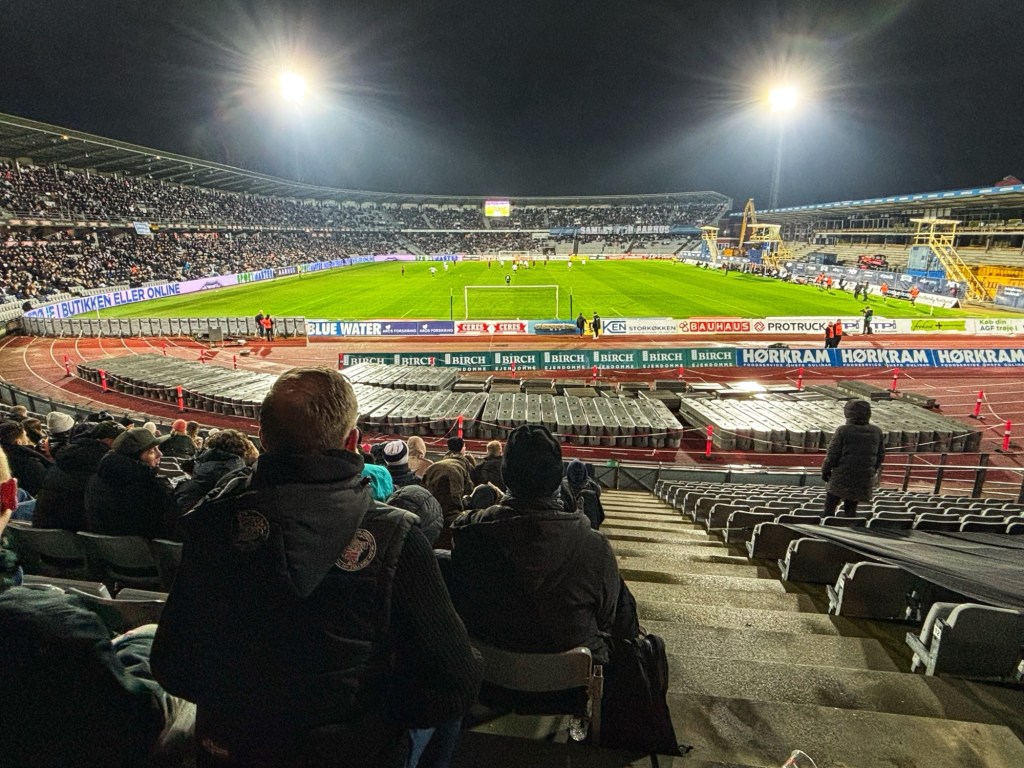
5759930100_5fd4737466_bAt 5pm today Brøndby kick off against AC Horsens in a “winner takes all” game. A defeat in East Jutland for the blues will see them relegated from the top division of Danish football. For the Brøndby fans, this was another serious kick in the teeth. In the past few years, the big two, or “New Firm” of the Blues and arch rivals FC Copenhagen have seen their power base eroded by the likes of OB from Odense, AaB from Aalborg and FC Midtjylland from Herning. Add to this list the new Superligaen champions, FC Nordsjælland and you can start to feel the pressure that Brøndby are under each season in a league of just twelve sides. But even so, they should be better than a relegation-haunted side. So where has it all gone wrong?

Danish football is not flush with money. FCK’s Champions League millions of Kroner aside, teams are successful in the domestic game today because they invest in their youth and scouting structure. This approach has benefited the national side as well as they are going for qualification to the 2014 FIFA World Cup in Brazil, which will be their third major tournament in a row.

To understand how far Brøndby have fallen behind the rest of Danish football we need to go back ten years to the 2002/03 season. Back then, the rivalry with FC Copenhagen was just a decade old. The Blues had finished the previous season as Superligaen champions, pipping FCK to the title on goal difference after a 1-1 draw in the final New Firm derby at Parken, the national stadium in front of a sell out crowd. In a major coup, the club managed to convince Danish legend and ex-captain Michael Laudrup to join the club as coach.

5700757403_40edd40e71_bThe name Laudrup is like royalty in Denmark. At Brøndby it is revered like a deity. The Laudrup legacy goes back three generations, starting when Finn Laudrup joined the club as coach in 1973. Back then live in Denmark was very different to today. The major teams were the likes of KB, Vejle, Hvidovre and B1903, small amateur clubs who relied on team spirit, windswept muddy pitches and little else. Brøndby were a small team playing in the fourth tier of Danish football in an athletics ground with no spectator facilities. Both of his sons, Michael and Brian, started off in the youth leagues in the mid-Seventies, with the elder son Michael making his debut for the side in 1982, the same season that they finally made their debut in the top tier of Danish football.

A season later, Laudrup was a star in the making. Liverpool had been on the verge of signing him, but terms couldn’t be agreed and instead Denmark’s Player of the Season headed off to Juventus for around $1million, money that enabled Brøndby to build a foundation both on and off the pitch that delivered a Danish Championship for the first time in 1985. In the next seven seasons the club were never outside of the top two, winning a further four titles as well as reaching the quarter finals of the European Cup in 1987.

Life looked rosy for the Blues. And then along came FC Copenhagen. A team made after a controversial merger of KB and B1903 and given Parken as their home stadium was never going to be popular in Denmark, let alone in Copenhagen. Whilst the next few seasons still saw three further titles, it was the off the field activities that had the club hitting the headlines. After becoming only the second football club in the world, behind Tottenham Hotspur, to float on a stock exchange, a strange policy of diversification saw the club invest in a bank that almost took the club to financial oblivion.

Fortunately, events on the pitch saved the club. The Superligaen title returned to western Copenhagen in 1995, 1996 and 1997 and a huge redevelopment project began to deliver a stadium fit for European football. But the turning point for the club came in the summer of 2003 as the club basked in the glory of their ninth title. That was when Michael Laudrup came back to the club.

His plan, along with his assistant John Jensen, was to build a dynasty based on his principles of short passing style, with a very structured 4-2-3-1 formation. He started to bring in young players such as Daniel Agger, Casper Ankergren and Johan Elmander, player who would go on to make an impact on the English Premier League. In his first two seasons they finished runners-up to FCK but there was a feeling power was about to shift across the city.

The 2004/05 season will go down as the best in the history of Brøndby IF. Despite a poor start with a home defeat to Odense, the Blues soon moved towards the top of the table. They threw down their marker in the first Ny Derby game at Parken in September when they won 3-1. After that game they recorded eight wins and a draw to head the table going into the winter break. The title was there’s to lose. They didn’t taste defeat until April, losing at home to FC Midtjylland before a humiliating reverse in the game against FCK threatened to blow open the title race. But on the night of the 16 May, the Blues and Laudrup finally put the nail in FCK’s coffin. A five nil win at home was as good as it ever got for the club and the title was theirs.

So everything seemed in place for a new dynasty of Brøndby dominance. The following season the club found FCK in resurgent form. Going into the final few games of the season with the teams neck and neck at the top, there were mutterings that all was not well off the pitch. Laudrup and Jensen had met with the club to discuss a new contract but so far nothing was forthcoming. Whether this was a contributory factor to the team getting just four points from their last five games we will never know, but the title was conceded after a 4-1 defeat to Horsens.

5701384330_0326a2f28f_bIt turned out the rumours were true and Laudrup left the club in the summer, and so too did the hopes of thousands of fans. The club never really recovered from the end of the Laudrup era, often briefly promising to break the dominance of FCK that has seen the white half of the city claim five out of the last seven titles. Laudrup has now arrived in Wales, looking to try to repeat his success in the Premier League. However, he also has found live tough since leaving Copenhagen. Gigs at Getafe, Spartak Moscow and Mallorca haven’t yielded any success so far and as time goes on so does the hope of landing one of the big European jobs he was once tipped to take. There is of course the possibility of him taking over from Morten Olsen as National Team Coach, a role that Olsen tipped him for some four years ago.

There is, of course, another possibility. Could he be tempted back to Brøndby for another attempt to recreate the spirit of 2005? After last season’s disappointment, few thought that things could get any worse for the Blues. But just two wins from their opening sixteen Superliga games has seen them fail to get out of the relegation places for some weeks. Five points from seven games at home has seen some fans start to turn against the team.

The good times seem to be a million miles away for Brøndby at the moment, and they can only look on with envious eyes at the full houses champions FC Nordsjælland have had for the games versus Chelsea and Juventus. With every team in the Group Stages due to collect a base of €8.6 million it is hard to see how Brøndby will be able to compete financially with a team who were once seen as a small provincial team in Danish football.

5017001894_dab56dabaf_bNext season FCK and FCN will once again carry the Danish flag into the Champions League, whilst two more of the “upstarts” Randers and Esbjerg, both relegation favourites themselves in times not too long ago will go into the Europa League. If they don’t win, then Brøndby will have local derbies against Brønshøj BK next season, whose ground didn’t have floodlights when we last visited in 2010.

Football can be a harsh mistress at times, having no respect for reputation or past glories. Brøndby have a passion fan base and will support their team to the end. However, they will be hoping that next season they are still looking forward to the volatile atmosphere of a New Firm derby with FC Copenhagen rather than one against Brønshøj BK.

Unsporting Life


I’ve grown bored of hearing the footballing press belittling FC Nordsjælland this season before each Champions League Group Stage game. Lazy journalism, tired clichés and over use of Wikipedia have been the order of the day to explain who the Danish champions are. Whilst their appearance in the Group Stages owes as much to the poor showing of countries such as Scotland in previous European seasons as it does to the record of FC Copenhagen in the competition, they are there because they won their domestic league. They are the champions of their national league and quite rightly deserve a place in the Champions Cup – more so that 80% of other teams who didn’t earn the same honour.

Few gave them any hope of progressing. Even the Europa League was seen as a step to far. In truth the club themselves also shared this view but would still approach the campaign as a yardstick as to how far they had come in a short space of time. Nine years ago they made their European debut against FC Shirak in the old UEFA Cup. Four years ago they were back gain, even beating Queen of the South in the competition. Now they were ready to make their final bow at home in this years Champions League against Shakthar Donetsk, having already entertained Juventus and Chelsea.

Whilst the competition has given the players, fans and officials some great memories (and still with a visit to Stamford Bridge to come in two weeks time), their primary aim this season is to try to retain their SuperLiga title. With the long harsh winter already slowly descending on parts of Denmark, the club lays in second place, trailing the FCK machine by six points. Continue reading

The most passionate football nation in Europe


Two weeks ago I met a chap from Iceland at Copenhagen airport.  His first words to me were “I’m the most passionate football fan in the world”.  He had seen my Lewes FC Owners badge and knew exactly who the Rooks were, what league they were in and where they were in the league.  In fact when I randomly fired obscure non league teams at it he could answer every single question on location, league and position.  Curzon Ashton, Lincoln Moorlands Railways, Quorn.  You name it, he knew the answer.  He told me he watched about twenty games a week on the TV and Online, and devoted his whole life to following the beautiful game.  He showed me his list of “favourite” teams from across Europe.  Now I thought Andy Hudson had more favourites than a teenagers most visited adult websites, but this was taking it to the extreme.  His main team was KR Reykjavik back at home but also he avidly followed (deep breath here):-

Celtic,Rosenborg, Basel, Benfica, Helsingborgs, Rapid Wien, Olympiakos, Liverpool, AC Milan, Barcelona, Brondby, HJK Helsinki, Skendija Tetovo, Buducnost Podgorica, Hadjuk Split and BATE Borisov.

But this meeting got me thinking.  Which nation are the most passionate about their own domestic league?  My new “friend” in the thumbs up Inbetweeners way had claimed the Icelanders were – with just 12 clubs and a population of 328,000 he thought that more people watched top flight football in Iceland as a percentage than any other nation.

So in a spare moment (OK, hour) last week I fed all the relevant information into the TBIR super computer to see what the results were.  Now, it is hard to be very exact and so I had to make a couple of assumptions.

  • Population figures were taken from the CIA database
  • To calculate the attendance of the league I took the league average attendance per game from 2010/11 (or 2011 in case of summer leagues) and multiplied by the teams in the league – this would roughly show the number of people who went to top flight football in a two week period (i.e a home game for each club). The bible for any statistical world is of course European Football Statistics.
  • Obviously there is a small amount of overlap with away fans attending games so I took off 10% from the total to avoid double counting.
  • I was unable to find league attendances for Andorra, San Marino or Malta. In addition there isn’t a league in Liechtenstein as their teams play in the Swiss league.  However, the remaining 49 UEFA-affiliated Leagues were included.

The results were indeed very surprising.  The top ten “most passionate” countries about their own domestic league have an average FIFA ranking of 53 (and a UEFA one of 23).  There is only three countries in the top ten that are in the FIFA top ten, and the top three are all ranked by FIFA at over 118, and over 44 in Europe.  So in true TBIR Top of the Pops style let’s countdown from 10 to 1.

10th place – Switzerland (1.32% of the population watch a top flight match in 2010/11 season – Average attendance was 11,365 – Top supported club FC Basel who averaged 29,044)
Despite its peaceful aspect of mountains, cow bells and lakes, football in Switzerland is a passionate affair that often boils over into violence. The best supported team, FC Basel are now a regular in the Champions League Group Stages which has seen their average attendance rise to nearly 30,000.  Their average attendance for the Axpo Super League would be better if the two teams from Zürich realised their potential.  One cloud on the horizon in Switzerland is the financial stability of clubs – we have this season seen Neuchâtel Xamax go to the wall and several others are in a precarious position.  However, football is still seen as the number one sport, and with top flight clubs distributed across the country it is clear to see the appeal of the domestic game, especially as on the national side they have had a good few years. Continue reading

The miracle of Farum


At the end of the A S-Tog line on the Copenhagen Metro you will find a sleepy town called Farum. The 18,000 locals here are proud of their identity as Farumese and not Copenhagenites, with a huge spread of different nations immigrants making up more than half of the population. Here it is still frowned upon to wash your car on a Sunday, play football in the street or walk on the cracks in the pavement. The small town centre is dotted with trees and wouldn’t look out of place in a Danish Trueman Show. Yet if you carry on walking down Ryttergårdsvej from the train station you will eventually arrive at Farum Park, home to the new Danish champions, The Wild Tigers of FC Nordsjælland.

Whilst Montpellier’s title in France may have been a shock to many, FCN’s SuperLiga title must rank up there as one of the greatest achievements in European club football. Next season the club, who average less than 5,000 fans at Farum Park could very well find themselves having to make arrangements to host the likes of Real Madrid, Barcelona, Manchester City or Borussia Dortmund in the Champions League.

Thanks to the progress made by the domestic dominators FC Copenhagen in the Champions League, Denmark had gained direct access to the Group Stages of the competition next season as the 13th best ranked country in club football. FCK fans must have been rubbing their hands in delight as the UEFA cash would allow them to dominate the game even further. But then came the next step in the development of a project started back in 2003 by local businessman Allan Pedersen.

Continue reading

On the third day of Christmas….The best new ground visited


“On the Third Day of Christmas my true love gave to me….a trio of new grounds to see”

This was a toughie.  We saw games in forty new grounds in 2011 and so to pick three was very difficult because all had endeering factors.  Whyteleafe’s Church Road ground was idyllic in the Indian Summer, coupled with an seven goal thriller, but visit it in the dead of winter with a nil-nil draw and it may seem like the worst place on earth.  So we based it on our pure gut instinct of what it would be like all year round. Last year the honours went to Spartak Trnava in Slovakia. This year the winners are:-

3rd – The Bosuilstadion – Royal Antwerp
Antwerp had to be in the top three after one of those post game night’s out when you cannot remember getting home, but you did so with more money than you went out with, a half eaten Marmite crepe by your side and a pair of big girls pants in your pocket.  ”We are the great old” they sung at the Bosuilstadion both during the game and in the bar afterwards where the players freely mix with the fans.  A mixture of old and new, old-fashion benches alongside glassed in executive boxes.  Oh, and they serve strong Belgium beer!

2nd – The American Express Community Stadium – Brighton & Hove Albion
This was a tough one not to put top.  My first visit here was as a photographer on a baking hot day in July and so I had an all-access pass.  The stadium is magnificent and first time visitors approaching along the A27 from Brighton will be hard pressed to not swerve off the road when they first see the gleaming roof.  The stadium is perfect in so many ways.  Excellent site lines, a roof that seems to keep the noise of the fans in the stadium, pride in the heritage of the club around the edge of the ground and facilities that encourage fans to hang around after the game for a beer.

1st – Espelunde – BK Avarta
Who?  Where? I hear you say.  The Who is a Danish 2nd Division East side.  The Where is the western suburbs of Copenhagen.  So why has this topped the other thirty nine grounds?  Let me set the scene.  The sun is shining, the beer is cold and the sausages on the grill and sizzling.  The teams run out of an actual tunnel, made out of one of those huge concrete pipes set into the grassy hill. Fans sit on blankets on the grassy knolls watching the game fly by.  Even the home team bench sit on directors chairs, knowing that their ground is a cut above the rest.  See for yourself here.